|
Articles About Music
 |
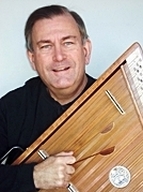
The Hammered Mbria
The origins of most traditional musical instruments are lost in the mists of time. The seminal events that gave us flutes, violins, banjos, dulcimers and other familiar instruments are unknown and unlikely to be discovered. But this is not the case with the newest form of the dulcimer – the hammered mbira. The inventor is known. His purpose is clearly stated. And the voice of the instrument is making itself heard. This article provides an interview with Don MacLane, inventor and builder of the hammered mbira.
|
 |
New Life for Old Tunes
Making familiar tunes sparkle is an important task every player must master. New life can be brought to an old chestnut by making a significant, purposeful revision of the tune. The word revision means “to see again.” To revise a tune, we have “to hear it again.” That means to place the essence of the melody into a new setting. The word for this process is reaudire (re-awe-DE-ray), meaning to hear again.
|
 |
Troubadour Tradition
The thigh bone of the extinct cave bear, a harp of ninth century Wales, itinerant noblemen singing in twelfth century France and performers entertaining an audience. The connection among all these obscure dots in history defines a profound human tradition that survives in spite of the modern ambush of technology and weapons of mass marketing.
|
 |
History of the Broadway Musical
Ask Americans to name their favorite song from a Broadway musical and it’s a good bet that many will recall George M. Cohan’s Give My Regards to Broadway. Cohan wrote the song for his first Broadway musical, the 1904 production of Little Johnny Jones. The show had an initial run of fifty-two performances. It was revived in 1905 and again in 1907. All together Give My Regards to Broadway was heard about four hundred times on a Broadway stage. Yet this century-old song is deeply entrenched in American culture.
|
 |
Celtic to Bluegrass
Bluegrass music is the result of a marvelous collision between Celtic music and African-American music. The story begins in 1618 with the arrival of the first fiddler in the New World. The first Africans arrived as slaves during the 1640s. The musical mix of African and European sensibilities created a steady progression of music styles that are collectively called "American music." Blues, ragtime, cakewalk, gospel, jazz, rock-n-roll, and bluegrass are the musical offspring of the interactions between the artistic descendants of that 1618 fiddler and those first, kidnapped Africans.
|
 |
Barbershop Singing
The quintessential American musical form of Barbershop Singing has its roots in the African-American community of the late 19th and early 20th centuries. The first published use of the term appear on the title page of the 1910 song Play That Barbershop Chord. The major Barbershop societies have more than eighty thousand members.
|
 |
Military Bands
While their role has changed over the centuries from communications to entertainment, U.S. military bands have helped our Nation celebrate, thank its warriors, mourn its losses, and so entwined their function in American culture that, without them, there might be no jazz or rock-and-roll.
|
 |
A Christmas Carol in Three Voices
O, Little Town of Bethlehem has remained a perennially favorite Christmas carol of musicians and listeners since it was written in 1868. The music was composed by church organist Lewis Redner to support a poem written by Episcopal priest Philips Brooks. Brooks’ visit to Bethlehem in1865 inspired him to write the poem we know as the lyrics to O, Little Town of Bethlehem. The Render melody is the tune most frequently heard in the U.S.A. In England the poem is usually sung to the folk tune Forest Green that was adapted by Ralph Vaughan Williams.
This article will explain eight steps to create a three-part arrangement of O, Little Town of Bethlehem using the Redner melody.
|
|
Pass the Link to this website to a friend
Click Here
To hear samples from Said the Moon or Spring Tide on the Tump,
Click on the images.


|